
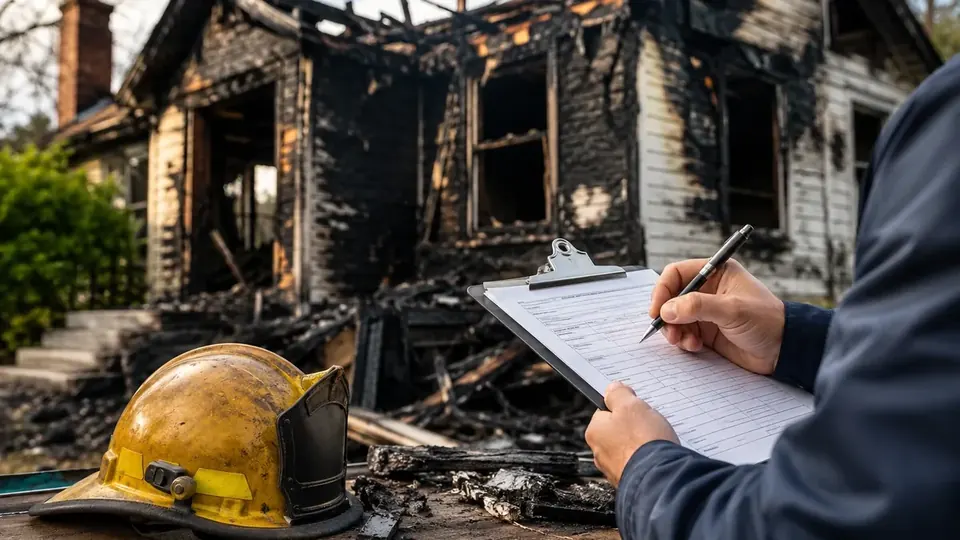
Corpus Christi fire damage claims are among the most demanding property claims an owner can face. A kitchen fire, electrical fire, lightning strike, or fire that spreads from a neighboring building can leave structural damage, heavy smoke and soot, water damage from firefighting, and a long list of destroyed belongings. At the same time, you may be looking for temporary housing or trying to keep a business running. If you own a home or business in Corpus Christi, Nueces County, or nearby Coastal Bend communities, this page explains how fire claims generally work, where they tend to get complicated, and how a public adjuster may help.
What Corpus Christi Fire Damage Claims Usually Include
A fire claim is usually several claims in one. Most homeowners and commercial property policies include these parts, each with its own limit:
| Part of the claim | What it usually involves | Common issue |
|---|---|---|
| Dwelling or building | Structural repairs, framing, roofing, electrical, plumbing, drywall, finishes | Scope of demolition and whether materials can be cleaned or must be replaced |
| Other structures | Detached garages, sheds, fences, carports | Separate, lower limit |
| Personal property (contents) | Furniture, clothing, electronics, appliances, tools, and other belongings | Building a complete inventory; depreciation |
| Loss of use or additional living expense | Reasonable extra costs of living elsewhere while repairs are made | Time limits, dollar limits, and documentation of expenses |
| Business income (commercial) | Lost income and extra expenses during the shutdown | Financial records and the length of the restoration period |
| Debris removal | Hauling away damaged materials | Limits and whether it is included within or added to the building limit |
Smoke and soot damage, and water damage from firefighting, are usually part of the same claim. Our smoke damage claims page covers smoke in more detail.
Smoke, Soot, and Firefighting Water
Damage from a fire often reaches far beyond the burned area. Smoke and soot move through HVAC ducts, attic spaces, and wall cavities, and can leave odor and residue in rooms the fire never touched. Firefighting water soaks drywall, insulation, flooring, and cabinets, and in the Coastal Bend's humidity, wet materials need fast drying to avoid mold. Common disputes include whether smoke-affected materials can be cleaned or must be replaced, whether the HVAC system needs cleaning or replacement, and how far demolition should go. See also our water damage claims page.
Building the Contents Inventory
For many households, the contents inventory is the hardest part of a fire claim. Most policies require you to list damaged or destroyed items with enough detail to value them. Helpful sources include:
- Photos and videos on your phone, cloud accounts, and social media that show rooms and belongings.
- Bank and credit card statements and online order histories.
- Receipts, manuals, warranty cards, and appraisals.
- A room-by-room walk-through, done with family members, listing what was in each closet, drawer, and cabinet.
Under replacement cost coverage, insurers typically pay actual cash value first and release recoverable depreciation after items are replaced, within the policy's time limit. Read more in replacement cost vs. actual cash value in Texas.
Codes, Permits, and Rebuilding
Fire repairs in Corpus Christi usually need permits. The city adopted the 2021 International Building Code, Residential Code, and related codes, plus the 2020 National Electrical Code, with local amendments effective August 1, 2023 (City of Corpus Christi). Rebuilding to current code can cost more than restoring what was there, and those added costs are usually paid only under ordinance or law coverage, up to its limit. Properties in the TDI windstorm catastrophe area may also need windstorm inspection for roof and structural repairs to remain eligible for TWIA coverage. See local building codes.
Texas Claim Timelines for Fire Claims
For many insurers, Texas Insurance Code Chapter 542 sets deadlines once a claim is reported. The insurer generally must acknowledge the claim and begin its investigation within 15 days, and accept or reject the claim within 15 business days after receiving the items it requested. If the insurer suspects arson, that decision period is 30 days. If the insurer needs more time, it must explain why and then decide within 45 days of that notice. Payment is generally due within 5 business days after acceptance (Tex. Ins. Code Ch. 542). Fire claims often involve a cause-and-origin investigation, and a recorded statement or examination under oath may be requested. If you are asked for an examination under oath or are concerned about how your claim is being handled, consider consulting a Texas attorney. Our delayed insurance claims page covers stalled claims.
Common Problems on Fire Claims
- Narrow scope. Estimates that clean and paint where smoke-damaged materials need replacement, or that stop demolition short of all affected areas.
- Missing systems. Electrical, HVAC, and plumbing damage from heat and smoke left out of the estimate.
- Contents undervalued. Heavy depreciation, missing categories, or low replacement prices.
- Living expense limits. Disputes over what counts as a reasonable extra cost and how long payments continue.
- Contractor-driven scopes. Remediation or restoration companies hired early may set a scope without a full review of the policy.
If a fire claim was paid low, see underpaid insurance claims.
How a Corpus Christi Public Adjuster May Help
A Corpus Christi Public Adjuster represents the policyholder only. On a fire claim, that may include reviewing every coverage part of the policy, inspecting and documenting the structure (photos, measurements, and sometimes Matterport 3D imaging), preparing a detailed line-item estimate, helping build the contents inventory, organizing living expense records, and communicating with the insurer's adjuster and consultants. Our article on working with a fire insurance adjuster covers this further.
We cannot promise any outcome; every claim depends on the policy and the facts. Fees are disclosed in a written contract before any work begins; Texas law caps public adjuster compensation at 10% of the insurance settlement.
First Steps After a Fire
- Make sure everyone is safe and do not enter the property until the fire department says it is safe.
- Get a copy of the fire department report when it is available.
- Report the claim to your insurer promptly and ask about living expense coverage.
- Secure the property with board-up and tarping to prevent more damage or theft; keep the receipts.
- Photograph and video everything before cleanup or disposal.
- Keep a log of every call, email, inspection, and expense.
Frequently Asked Questions
What does a fire insurance claim usually cover?
Most homeowners and commercial policies cover fire damage to the building, other structures, and personal property, along with smoke damage and water damage from firefighting, subject to limits and deductibles. Many homeowners policies also include loss of use or additional living expenses if the home is unlivable.
How long does the insurer have to respond to a fire claim?
For many insurers, Texas Insurance Code Chapter 542 requires acknowledgment within 15 days and a decision within 15 business days after the insurer receives the items it requested. If the insurer suspects arson, the decision deadline is 30 days. The insurer may extend by giving notice and its reasons.
Do I have to list every item that was damaged?
Usually, yes. Contents claims generally require an inventory with descriptions, quantities, ages, and replacement costs. Photos, videos, receipts, bank and card statements, and online order histories can help reconstruct the list.
Can smoke damage be covered even if the fire was in another room?
Often, yes. Smoke and soot travel through HVAC systems, wall cavities, and attics. Smoke damage in rooms the fire never reached may be part of the claim. See our smoke damage claims page.
Should I throw away damaged items right away?
Not until they have been documented. Photograph everything and ask the insurer before disposing of items, unless they pose a safety or health hazard. Keep a record of anything removed.
Can a public adjuster guarantee a larger fire settlement?
No. A public adjuster can help document the loss, prepare estimates and inventories, and present the claim, but no one can promise an outcome. Results depend on the policy and the facts.