
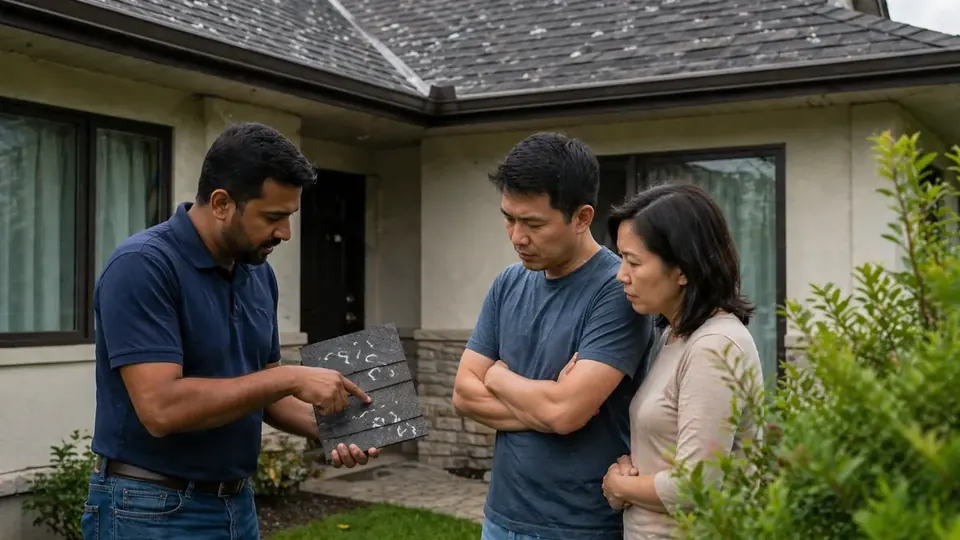
Corpus Christi wind damage claims come from more than hurricanes. Spring squall lines, tropical storms, and sudden downbursts all bring winds strong enough to strip shingles, peel metal roofing, knock down fences, and drive rain into walls. If you own a home or business in Corpus Christi, Nueces County, or nearby Coastal Bend communities, this page explains how wind claims usually work, what insurers look for, and how a licensed public adjuster may help.
Recent events show how intense local wind can be. On May 8, 2025, a line of severe storms produced National Weather Service estimated gusts of 105 to 115 mph around Petronila, Driscoll, and Agua Dulce in western Nueces County, snapping power poles and lifting mobile homes off their foundations (NCEI event record). During Tropical Storm Harold in August 2023, Corpus Christi International Airport recorded a gust of 62 mph, and tree and fence damage was reported in Flour Bluff. NOAA data show thunderstorm wind reports in Nueces County are most common in May, followed by March, June, and April.
What Corpus Christi Wind Damage Claims Usually Involve
Wind damage is not always obvious from the ground. Shingles can be lifted and creased, breaking the seal strip, and then lie back down looking almost normal. Damage we commonly see documented includes:
- Roofing – missing or creased shingles, lifted ridge caps, displaced metal panels, and torn underlayment. See roof damage insurance claims.
- Exterior walls – loose or missing siding, cracked stucco, damaged fiber cement, and broken trim.
- Openings – broken windows, damaged garage doors, and torn screens.
- Wind-driven rain – water entering through a storm-created opening and damaging ceilings, insulation, drywall, and flooring.
- Fallen trees and debris – impact damage to roofs, cars, carports, and outbuildings.
- Other structures – fences, sheds, barns, and detached garages.
Which Policy Covers Wind on the Coastal Bend?
This is the first question to answer. Nueces, San Patricio, Aransas, and Kleberg counties are all in the Texas Windstorm Insurance Association catastrophe area, and many homeowners policies there exclude wind and hail. If yours does, the wind claim goes to your TWIA policy, which has its own statutory deadlines. Our TWIA windstorm claims page explains that process. Inland properties, or properties with a private policy that includes wind, file with their regular carrier.
| Situation | Where the wind claim usually goes | Key thing to check |
|---|---|---|
| Homeowners policy excludes wind and hail | TWIA windstorm policy | One-year TWIA filing deadline and wind/hail deductible |
| Homeowners or commercial policy includes wind | Your regular insurer | Wind/hail deductible and roof payment schedules |
| Wind and storm surge on the same building | Wind policy for wind, flood policy for surge | Evidence separating wind damage from water damage |
| Tree falls on the house | Policy that covers the wind peril | Debris removal limits and any other structures coverage |
Documenting a Wind Damage Claim
Good documentation connects the damage to a specific storm date and shows the full scope of what needs to be repaired.
- Photograph and video the roof, all four elevations, and every damaged room before cleanup.
- Collect weather evidence such as NOAA Storm Events entries and NWS storm surveys. Our guide on using NOAA weather records explains how.
- Get a detailed inspection that records lifted or creased shingles, failed seals, and directional damage patterns.
- Prepare a line-item estimate covering roofing, exterior, interior, and any code items.
- Save receipts for tarping, board-up, tree removal, and water extraction.
Our claim documentation checklist has a full list.
Common Insurer Arguments on Wind Claims
- "Wear and tear." Older roofs and salt-air corrosion on metal components are often cited as the cause instead of wind.
- "Not enough wind." The insurer may say measured winds were too low to cause the damage. Local data from nearby stations and NWS surveys can be important here.
- "Repairable, not replaceable." Spot repairs may be allowed even when shingles are brittle, discontinued, or cannot be matched.
- Interior damage excluded. The insurer may argue rain entered without a storm-created opening.
- Prior damage. The carrier may say the damage came from an earlier storm or a different policy period.
If a wind claim has been denied or paid low, see our pages on denied insurance claims and underpaid insurance claims.
How Wind Damage Shows Up Across the Coastal Bend
Building types around Corpus Christi affect what wind damage looks like and how it is argued. On the mainland, many slab-on-grade homes have composition shingle roofs, where the key question is often whether shingle seals failed and tabs were creased. In rural parts of Nueces and San Patricio counties, metal roofs on homes, barns, and shops can lose fasteners or peel back at the edges, and salt air can complicate the wear-and-tear discussion closer to the water. Elevated homes on Padre Island, Mustang Island, and in Port Aransas face higher exposure, and their stairs, decks, and lower enclosures are often damaged too. Manufactured homes, carports, and light outbuildings are especially vulnerable to strong gusts, as the May 2025 storm showed. Wherever your property sits, from Robstown and Calallen to Portland and Rockport, the same documentation steps apply; see our service areas.
Codes, Permits, and Windstorm Certification
Wind repairs in Corpus Christi often involve permits. The city requires a permit for re-roofing, and the roofing submission includes a TDI WPI-1 form from the windstorm engineer or inspector (City of Corpus Christi). The city's local design criteria list a design wind speed of 140/150 mph and a windborne debris zone. Code-driven costs are usually paid only under ordinance or law coverage, up to its limit.
How a Corpus Christi Public Adjuster May Help
A Corpus Christi Public Adjuster works for the policyholder. On a wind claim, that may include identifying which policy applies, inspecting the property, preparing a detailed estimate, gathering storm data, and communicating with the insurance adjuster on your behalf. If the insurer has already issued a payment, we can review the estimate line by line for missing scope.
We do not promise outcomes; every claim depends on the policy and the facts. Fees are disclosed in a written contract before any work begins; Texas law caps public adjuster compensation at 10% of the insurance settlement.
Policyholder Responsibilities After Wind Damage
- Give prompt notice to your insurer, and to TWIA if wind is excluded from your homeowners policy.
- Take reasonable steps to prevent more damage and keep the receipts.
- Keep damaged materials when practical, or photograph them before disposal.
- Respond to requests for information and submit any proof of loss on time.
If you have questions about a lawsuit or deadlines to sue, consult a Texas attorney.
Frequently Asked Questions
Is wind damage covered by my homeowners policy or by TWIA?
It depends on your policy. Many homeowners policies in Nueces, San Patricio, Aransas, and Kleberg counties exclude wind and hail, and those perils are covered by a separate TWIA windstorm policy instead. Your declarations page and any wind/hail exclusion endorsement will show which applies.
Does a wind claim cover rain that came inside?
Many policies cover interior water damage when wind or hail first creates an opening in the roof or walls that lets rain in. Rain that enters without a storm-created opening may be treated differently. The exact policy wording controls.
How do I prove high winds hit my property?
NOAA Storm Events records, NWS storm surveys, nearby weather station data, and dated photos all help. Our storm lookup tool and our weather events page are good starting points.
My adjuster says only a few shingles need repair. What can I do?
Ask for the estimate in writing and compare it against an independent inspection. Matching, brittle materials, and code requirements can affect whether a repair is practical. An insurance estimate review can identify missing items.
What is a wind/hail deductible?
Many Texas policies carry a separate deductible for wind and hail, often a percentage of the dwelling (Coverage A) limit. A 2% deductible on a $300,000 dwelling limit, for example, would be $6,000. Check your declarations page for your figure.
Can a public adjuster guarantee my wind claim will be approved?
No. A public adjuster can help document and present the claim, but coverage and payment depend on your policy and the facts. No one can promise an outcome.