
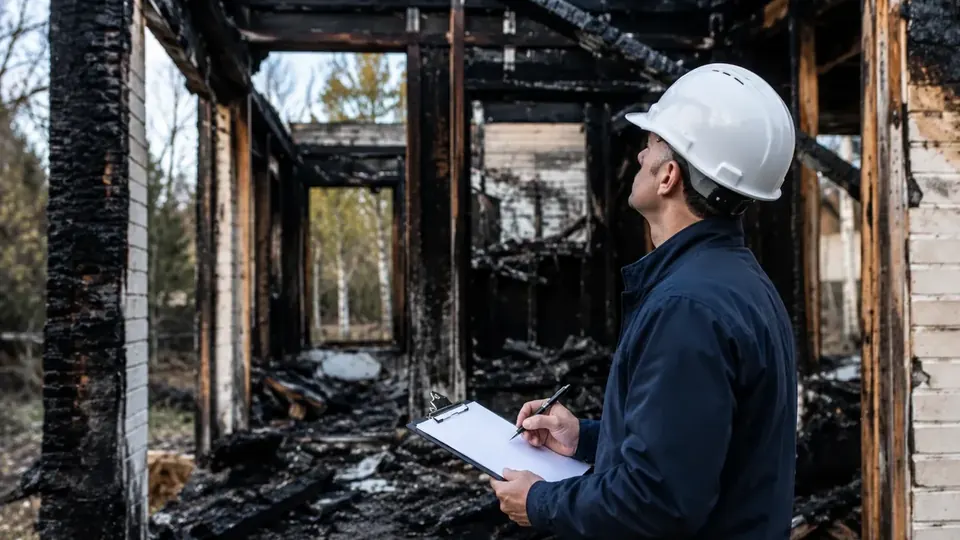
Smoke damage claims in Corpus Christi rarely stay inside the room where the fire started. Smoke is pushed by heat and pressure into attics, wall cavities, closets, and air ducts, and it leaves acidic soot and odor behind on nearly everything it touches. Insurers sometimes scope these losses narrowly, focusing on the burned area and offering light cleaning everywhere else. As a Corpus Christi Public Adjuster, we help property owners document where smoke actually traveled and what it takes to restore the property, so the claim is measured against the real loss.
How Smoke Damage Spreads Through a Building
Fire produces hot gases that rise and spread until they find cooler surfaces or a way out. Along the way, soot settles on ceilings, cabinet interiors, insulation, and fabric. A few patterns are common in Coastal Bend homes and businesses:
- Attic migration. Many local homes are single-story, slab-on-grade houses with open attics. Smoke from a kitchen or garage fire can fill the attic, coating framing and insulation that no one sees during a quick walk-through.
- HVAC distribution. If the air handler was running, it may have pulled smoke into the return and pushed soot through every supply register in the building.
- Shared walls. In duplexes, apartments, condos, and strip centers, smoke from one unit often reaches the next through plenums, attic spaces, and wall penetrations.
- Neighboring fires. A fire next door or a large grass fire can drive smoke in through soffit vents, gaps around windows, and open doors.
Our coastal humidity can make residue harder to remove and odor more persistent, especially on porous surfaces. That is one reason a cleaning-only scope does not always restore a property to its pre-loss condition.
Types of Smoke and Soot Residue
Different fuels leave different residues, and the residue type affects how surfaces must be cleaned. The table below is a general guide that restoration professionals commonly use.
| Residue type | Typical source | Why it matters for the claim |
|---|---|---|
| Dry, powdery soot | Fast, hot fires burning paper or wood | Easier to vacuum, but fine particles reach far into ducts and contents |
| Wet, smeary soot | Slow, smoldering fires burning plastics or rubber | Smears when wiped; often needs specialized cleaning and may stain permanently |
| Protein residue | Kitchen fires involving food | Nearly invisible but carries strong odor and can discolor paint and cabinets |
| Fuel or petroleum residue | Fires involving fuels, oils, or equipment | Dense and sticky; common in garage, shop, and commercial losses |
| Wildfire or exterior smoke | Grass fires or fires on neighboring property | Enters through vents and openings; often affects attics and HVAC systems |
What a Complete Smoke Damage Scope Often Includes
A well-documented smoke claim typically goes beyond wiping walls and repainting. Depending on the loss, the scope may need to address:
- Cleaning or replacing insulation and treating attic framing
- HVAC inspection, duct cleaning, and replacement of components that cannot be cleaned
- Sealing and repainting ceilings, walls, trim, and cabinet interiors
- Cleaning or replacing flooring, especially carpet and pad that hold odor
- Deodorization, which may include thermal fogging, ozone, or hydroxyl treatment by a qualified contractor
- Contents cleaning, pack-out, and storage, plus replacement of items that cannot be restored
- Electronics evaluation where soot may have entered the housing
- Additional living expense or business income while the property is unusable
Firefighting often leaves water damage too. If water from hoses or sprinklers soaked drywall and flooring, that part of the loss belongs in the claim as well. See our fire damage claims and water damage claims pages for how those pieces fit together.
Common Disputes in Smoke Damage Claims
Clean versus replace
This is the most frequent disagreement. An insurer may propose cleaning drapes, upholstered furniture, or a mattress, while the owner reports that the odor remains after cleaning. Documenting the result of cleaning, not just the plan to clean, is often what resolves it.
Limiting the affected area
Some estimates include only the room of origin and the adjoining rooms. Photos of soot inside closed cabinets, on attic framing, and at distant supply registers can show that smoke traveled farther. Wipe samples or reports from an indoor environmental professional can add weight when the residue is not obvious.
Odor that returns
Odor can reappear on hot, humid days, which are common in Corpus Christi most of the year. If odor comes back after deodorization, that should be reported to the insurer in writing promptly.
Matching and uniform appearance
When some cabinets, flooring, or wall finishes are replaced and others are cleaned, the result may not match. How matching is handled depends on the policy language and the facts; it is worth raising early rather than after repairs are complete.
Documentation That Supports a Smoke Claim
- Photograph every room, including inside cabinets, closets, the attic, and HVAC registers, before cleaning begins.
- Keep a written inventory of affected contents, with approximate age and cost where you can.
- Save receipts for hotel stays, meals, and other additional expenses.
- Request copies of any fire department report and keep all insurer correspondence.
- Ask contractors and cleaners for written reports describing what they found and what they recommend.
Our claim documentation checklist walks through these items in more detail. For an overview of how depreciation affects contents and building items, read replacement cost vs. actual cash value in Texas.
How Corpus Christi Public Adjuster Can Help
We inspect the property for the full path of smoke, review your policy, and prepare a detailed estimate in Xactimate, the estimating software insurers commonly use. Where it helps, we use Matterport 3D imaging and room-by-room photos so the insurer can see conditions that are gone once cleaning starts. We then present the claim, answer the insurer's questions, and negotiate scope and pricing on your behalf. If the insurer's estimate is already in hand, an insurance estimate review can show where items or rooms were left out.
We work with homeowners through residential property claims and with business owners and property managers through commercial property claims, across Corpus Christi, Nueces County, and nearby Coastal Bend communities. Results depend on your policy and the facts of the loss, and we cannot promise a particular outcome. Fees are disclosed in a written contract before any work begins; Texas law caps public adjuster compensation at 10% of the insurance settlement.
If you have questions about how public adjusters are licensed and regulated in Texas, the Texas Department of Insurance publishes consumer information, and you can read more on our public adjuster questions article. To have someone look at your smoke damage claim, request a Free Claim Review.
Frequently Asked Questions
Is smoke damage covered if there was no fire in my building?
Many property policies cover smoke damage from a sudden and accidental fire even when the fire started on a neighboring property. Coverage depends on your policy wording and exclusions, so read the smoke and fire provisions or ask us to review them with you.
Why does the insurer want to clean items I think should be replaced?
Cleaning is often cheaper, and many items can be cleaned successfully. The question is whether cleaning actually restores the item. Porous materials, electronics with soot inside, and items that still smell after cleaning are common points of disagreement. Test results and post-cleaning inspections help settle the question.
Should my HVAC system be inspected after a fire?
Usually, yes. If the system was running during or after the fire, it can carry soot through the ductwork into rooms that were never near the flames. An inspection by a qualified HVAC or duct-cleaning contractor helps document whether cleaning or replacement is needed.
Does my policy pay for a hotel while smoke cleanup happens?
Many homeowners policies include additional living expense (often called loss of use) when the home is not fit to live in during repairs. Business policies may include business income coverage. Limits and conditions vary; check your declarations page and policy forms.
How long do I have to report smoke damage?
Policies generally require prompt notice of a loss, and many set other deadlines as well. Report the loss as soon as you can and read your policy for specific time limits. For questions about deadlines to file suit, consult a Texas attorney.
What does a public adjuster cost for a smoke claim?
Fees are disclosed in a written contract before any work begins; Texas law caps public adjuster compensation at 10% of the insurance settlement. The Free Claim Review has no cost and no obligation.