
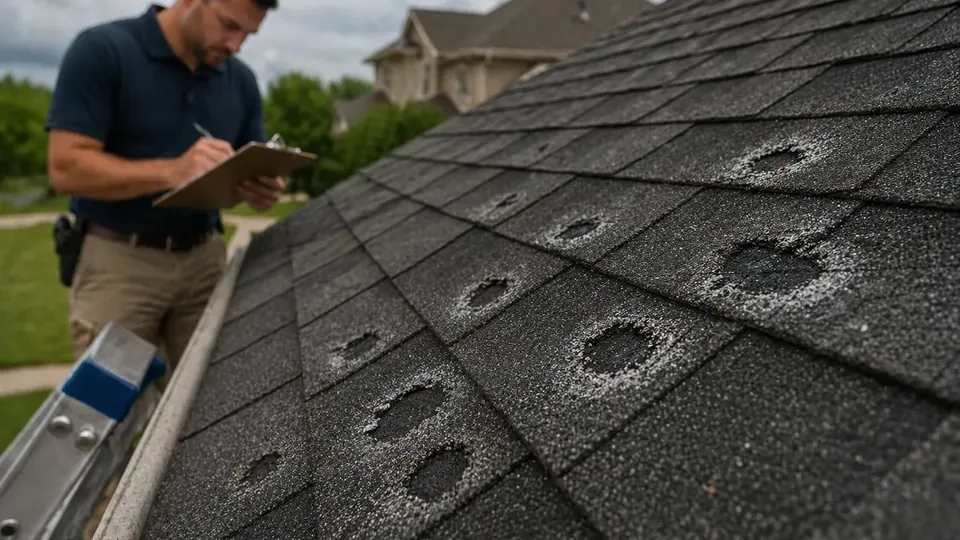
Corpus Christi roof damage insurance claims make up a large share of the property claims filed on the Coastal Bend, and for good reason. Roofs here deal with spring hail, strong straight-line winds, tropical storms, hurricanes, intense sun, and salt air. When a storm damages your roof, the claim often turns on technical questions: what caused the damage, whether it can be repaired, what the city and the state windstorm program require, and how the policy values an older roof. This page covers how roof claims usually work for homes and businesses in Corpus Christi, Nueces County, and nearby communities.
Common Causes of Roof Damage Claims in Corpus Christi
- Hail. Nueces County hail reports cluster in April and May. Hail can bruise and fracture shingles, knock off granules, dent metal roofing, and puncture low-slope membranes. See hail damage claims.
- Wind. Wind lifts and creases shingle tabs, breaks seal strips, peels metal panels at the edges, and tears off ridge caps. The May 8, 2025 storm produced NWS-estimated gusts of 105 to 115 mph in western Nueces County (NCEI event record). See wind damage claims.
- Hurricanes and tropical storms. Sustained winds, gusts, and wind-driven rain can damage the whole roof system at once. See hurricane damage claims.
- Fallen trees and debris. Impact damage to decking, rafters, and trusses.
- Fire. Direct fire, heat, and firefighting damage to the roof assembly.
Roof Types on the Coastal Bend and How They Fail
| Roof type | Common storm damage | Typical claim issue |
|---|---|---|
| Composition (asphalt) shingles | Bruising, fractures, granule loss, creased or missing tabs | Hail vs. wear, repair vs. replace, matching |
| Metal panels | Dents, displaced panels, failed fasteners, edge peel | Cosmetic damage exclusions; corrosion vs. storm damage |
| Tile (clay or concrete) | Cracked or broken tiles, displaced tiles | Availability and matching of replacement tiles |
| Low-slope commercial (TPO, modified bitumen, built-up) | Punctures, seam damage, wet insulation | Moisture surveys and how much insulation is wet |
Repair or Replace? How the Scope Gets Decided
The biggest dollar question on most roof claims is whether the insurer pays for spot repairs or a full replacement. Factors that often matter include:
- Extent of damage on each slope, often recorded with test squares.
- Repairability. Older shingles can become brittle, and lifting them to make a repair can cause more damage.
- Matching. Discontinued shingles, colors, or metal profiles may not be available.
- Code and permit requirements. Corpus Christi adopted the 2021 International Residential Code with local amendments effective August 1, 2023 (City of Corpus Christi). The city's homeowner permitting guide lists replacing more than 100 square feet of shingles, removing and replacing decking, and changing roof material among the work that needs a permit. See local building codes.
Code-required upgrades are typically paid only under ordinance or law coverage, up to its limit. Code requirements alone do not create coverage.
Windstorm Certification and TWIA Eligibility
Corpus Christi and the rest of Nueces, San Patricio, Aransas, and Kleberg counties are in the TDI windstorm catastrophe area. The TDI Windstorm Inspection Program covers re-roofs and roof repairs there, and inspections are done by appointed Texas-licensed engineers or TDI inspectors (TDI). Starting April 1, 2026, WPI-1 applications must be certified to the 2024 IRC or IBC. Uncertified work can affect eligibility for TWIA coverage, which many coastal owners rely on for wind and hail. Our WPI-8 windstorm certificate guide explains more.
Reviewing the Insurer's Roof Estimate
A roof estimate can look complete and still leave out real costs. Items that are often missing or underpriced include:
- Tear-off and disposal of each existing layer.
- Drip edge, starter course, hip and ridge caps, and valley materials.
- Underlayment and ice-and-water or self-adhered membranes where required.
- Flashing, pipe jacks, vents, and roof-mounted equipment detach and reset.
- Decking replacement where boards are damaged or deteriorated.
- Steep-roof and high-roof charges, and overhead and profit where a general contractor is reasonably needed.
- Windstorm engineering or inspection costs.
Our guide on how to review an underpaid roof insurance estimate covers this in depth. If items were missed after payment, an insurance claim supplement may be appropriate.
Depreciation and Roof Payment Schedules
Under replacement cost coverage, the insurer typically pays actual cash value first, which is replacement cost minus depreciation, and releases recoverable depreciation after the roof is replaced, within the deadline in the policy. Some policies limit roof coverage to actual cash value or use a payment schedule based on roof age, which can sharply reduce what an older roof receives. Read your declarations page and endorsements before you sign a roofing contract, and use our claim calculator to see how deductibles and depreciation affect the check.
Interior Damage From a Damaged Roof
A roof claim is often more than a roof claim. When hail punctures a membrane or wind tears off shingles, rain can soak attic insulation, stain ceilings, and run down inside walls before anyone notices. Many policies cover that interior water damage when the storm created the opening, subject to policy terms. Document wet ceilings, drywall, insulation, flooring, and contents along with the roof itself, and dry things out quickly so the loss does not grow into a mold problem. Delayed drying can give an insurer reason to argue that some of the damage came from neglect rather than the storm. If water has already spread, our water damage claims page explains what to expect on that side of the claim.
Salt air is another local factor. Fasteners, flashing, and metal roof components closer to the bays and the Gulf can corrode over time, and insurers sometimes point to corrosion as the cause of a failure. Clear photos of fresh storm damage, taken soon after the event, help separate new damage from long-term wear.
How a Corpus Christi Public Adjuster May Help
A Corpus Christi Public Adjuster represents the insured only. On a roof claim, that may include a detailed roof inspection with photos and measurements, review of the policy and roof endorsements, a line-item estimate that accounts for code and windstorm requirements, and communication with the insurer's adjuster. Texas law requires a license to act as a public adjuster, and every public adjuster contract must state "WE REPRESENT THE INSURED ONLY" and allow you to rescind in writing within 72 hours of signing. We cannot promise any result. Fees are disclosed in a written contract before any work begins; Texas law caps public adjuster compensation at 10% of the insurance settlement.
Before You Start Roof Repairs
- Photograph the roof and interior damage, and keep damaged samples when practical.
- Tarp openings to prevent more water damage, and keep the receipts.
- Report the claim promptly to the right insurer: your homeowners carrier or TWIA, depending on your coverage.
- Let the insurer inspect before permanent repairs, unless waiting would cause more harm.
- Confirm permits and windstorm inspection with your roofer before work begins.
For questions about deadlines to sue or a dispute that may need legal action, consult a Texas attorney.
Frequently Asked Questions
Do I need a permit to replace my roof in Corpus Christi?
Yes. The City of Corpus Christi requires a permit for re-roofing. The roofing submission includes a residential permit application, a detailed scope of work, and a completed TDI WPI-1 form from the windstorm engineer or inspector responsible for windstorm compliance.
Will insurance pay for a full roof replacement?
It depends on the extent of storm damage, whether the roof can be repaired or matched, and your policy. Some claims support full replacement; others are paid as repairs. The inspection and estimate need to show why the scope is what it is.
What is a roof payment schedule?
Some policies pay roof claims on a schedule based on roof age, or limit roof coverage to actual cash value. That can reduce payment on older roofs. Check your policy for endorsements that change how roof losses are valued.
My roof is old. Can I still file a claim?
Yes, if a covered storm damaged it. Age affects depreciation and may lead the insurer to argue wear and tear, but an older roof can still have covered hail or wind damage. Documentation tying the damage to a specific storm is important.
Does TWIA require a windstorm inspection for roof repairs?
The TDI Windstorm Inspection Program covers re-roofs and roof repairs in the catastrophe area. Work that is not certified may affect future eligibility for TWIA coverage. Talk with your roofer about windstorm inspection before work starts.
Should I let my roofer handle the insurance claim?
A roofer can help with repair scope and pricing, but a roofer works for the repair job. Texas law requires a license to act as a public adjuster, and a public adjuster’s contract must state “WE REPRESENT THE INSURED ONLY.” For legal questions, consult a Texas attorney.