
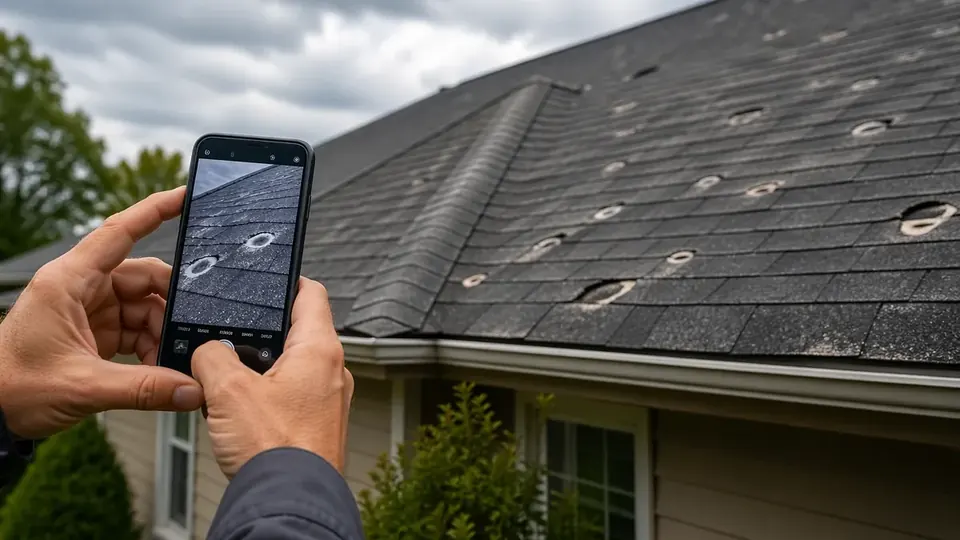
Corpus Christi storm damage claims cover a wide range of weather. In a single year, the Coastal Bend can see spring hail, squall lines with damaging straight-line winds, brief tornadoes, tropical storms, flash flooding, and the occasional hard freeze. NOAA's Storm Events Database lists 973 weather reports for Nueces County since 1953, including 287 thunderstorm wind reports, 134 hail reports, 107 tornado reports, and 256 flash flood reports. If you own a home or business in Corpus Christi, Nueces County, or nearby communities, this page explains how storm claims generally work and how a public adjuster may help.
Many storm claims involve more than one type of damage, and sometimes more than one insurance policy. Sorting that out early helps keep the claim on track. Our Corpus Christi storm history article has more local background.
Types of Corpus Christi Storm Damage Claims
| Storm type | Local example | Typical damage |
|---|---|---|
| Hail | Baseball-size hail west of Calallen, April 24, 2016 | Roofs, windows, siding, AC units, vehicles |
| Straight-line wind | NWS-estimated 105–115 mph gusts near Petronila, Driscoll, and Agua Dulce, May 8, 2025 | Roofs, fences, outbuildings, manufactured homes, trees |
| Tornado | EF1 tornado near Golihar Road in Corpus Christi, May 24, 2015 | Snapped and uprooted trees, roof and structural damage |
| Tropical storm | Tropical Storm Harold, August 22, 2023 (62 mph gust at Corpus Christi International Airport) | Wind damage, wind-driven rain, elevated tides |
| Hurricane | Hurricane Hanna, July 25, 2020 | Wind, rain, and storm surge damage |
| Flash flooding | Recurring heavy-rain events across Nueces County | Flooded slab homes, garages, vehicles, and contents |
Event details come from the NOAA NCEI Storm Events Database. Each type of storm has its own service page with more detail: hail, wind, hurricane, and flood.
Which Policy Responds to Storm Damage?
On the Coastal Bend, the answer depends on the cause of each part of the damage and on how your coverage is set up:
- Wind and hail are covered by your homeowners or commercial policy unless it excludes them. In Nueces, San Patricio, Aransas, and Kleberg counties, many policies do, and the wind and hail coverage comes from a TWIA windstorm policy instead.
- Rain that enters through a storm-created opening is often covered under the policy that covers the wind or hail that made the opening.
- Flood and storm surge are generally excluded from homeowners and commercial policies and are covered only by an NFIP or private flood policy.
- Lightning and fallen trees are typically covered by the main property policy, subject to its terms and limits.
When a storm produces both wind and flood damage, each insurer may argue the other is responsible. Clear documentation of what happened, and in what order, matters.
Documenting Storm Damage
The goal is to show what was damaged, when, and by what. A strong storm claim file usually includes:
- Photos and video of every elevation, the roof, and each damaged room, taken before cleanup and repeated after tarping.
- Weather evidence such as NOAA Storm Events entries, NWS storm surveys, and nearby station data. See our guide to using NOAA weather records.
- Water lines measured and photographed if flooding was involved.
- A contents inventory listing damaged items with descriptions, ages, and replacement prices.
- Receipts for emergency repairs, water extraction, tree removal, and temporary housing.
- A line-item estimate for the full repair scope, including code items.
Our claim documentation checklist lays out each item.
Claim Timing and Texas Prompt Payment Rules
For many insurers, Texas Insurance Code Chapter 542 sets deadlines once a claim is reported: acknowledge the claim and begin the investigation within 15 days, accept or reject within 15 business days after receiving the items requested, and pay within 5 business days after accepting. After a weather-related catastrophe or major natural disaster, as defined by the Commissioner, these deadlines are extended by 15 days (Tex. Ins. Code Ch. 542). TWIA claims follow separate deadlines under Chapter 2210; see TWIA windstorm claims. Large storms can still slow things down, and our delayed insurance claims page covers what to do when a claim stalls.
Common Problems on Storm Claims
- Cause disputes – wear and tear, prior damage, or flood blamed instead of wind or hail.
- Incomplete scope – estimates that miss interior damage, other structures, or code-required items.
- Deductible surprises – percentage wind/hail or named-storm deductibles that are larger than expected.
- Depreciation – heavy depreciation on older roofs and contents.
- Missed deadlines – late notice or missed TWIA or policy deadlines.
Storm Claims for Businesses and Rental Properties
Commercial storm claims add layers that homeowners rarely face. Low-slope roofs on retail centers, warehouses, and offices can hold water after a puncture, soaking insulation across a wide area before a leak shows up inside. Signs, rooftop HVAC units, canopies, and parking lot lighting are often damaged in the same storm. If the business has to close or slow down, business income and extra expense coverage may apply, but those claims usually require detailed financial records showing what the interruption cost. Owners of rental homes and apartment buildings may also have loss of rents coverage, subject to policy terms. Starting documentation on the day of the storm, and keeping it organized, can make a large difference later. Our commercial property claims page goes into more detail, including how commercial losses are usually documented.
How a Corpus Christi Public Adjuster May Help
A Corpus Christi Public Adjuster represents the policyholder only. After a storm, that may include reviewing each of your policies, inspecting the property, building a detailed estimate, gathering weather evidence, separating wind damage from water damage as far as the evidence allows, and handling communication with each insurer. We serve Corpus Christi, Nueces County, and surrounding Coastal Bend communities, from Portland and Ingleside to Rockport, Port Aransas, and Kingsville.
We cannot promise any outcome; every claim depends on the policy and the facts. Fees are disclosed in a written contract before any work begins; Texas law caps public adjuster compensation at 10% of the insurance settlement.
Your Responsibilities After a Storm
- Give prompt notice to every insurer that may be involved.
- Take reasonable steps to prevent more damage and keep the receipts.
- Preserve damaged materials or photograph them before disposal.
- Answer information requests and submit any proof of loss on time.
- Keep a claim log of calls, emails, inspections, and payments.
If you have questions about a lawsuit, bad faith, or the deadline to sue, consult a Texas attorney.
Frequently Asked Questions
What counts as storm damage for insurance purposes?
Insurers look at the specific peril that caused each part of the damage: wind, hail, lightning, falling objects, water, or flood. Most property policies cover wind and hail (or leave them to TWIA near the coast), while flood is usually excluded and covered separately by an NFIP or private flood policy.
How soon should I report storm damage?
As soon as you reasonably can. Most policies require prompt notice, and TWIA claims must be filed within one year of the date of damage. Reporting early also makes it easier to tie the damage to a specific storm date.
How do I find out which storm hit my property?
NOAA Storm Events records and National Weather Service reports list local hail, wind, and tornado reports by date and location. Our storm lookup tool and weather events page can help you get started.
How long does the insurer have to respond to my storm claim?
For many insurers, Texas Insurance Code Chapter 542 requires acknowledging the claim within 15 days and accepting or rejecting it within 15 business days after receiving the items it requested, with a 15-day extension after a declared weather catastrophe. TWIA claims follow separate deadlines in Chapter 2210.
Can I file one claim for both wind and flood damage?
Usually not. Wind and hail claims go to your homeowners insurer or TWIA, and flood claims go to your flood insurer. Each claim needs its own documentation, and the evidence has to separate the two types of damage where possible.
Will hiring a public adjuster guarantee a better result?
No. A public adjuster can help document and present the claim, but no one can promise an outcome. Payment depends on the policy and the facts of the loss.