Key takeaways
- Hail damage to a roof is often subtle from the ground: bruised shingles, lost granules, and dented metal.
- Most Nueces County hail reports come in April and May, so spring storms deserve a close look at your roof.
- Many coastal homes carry hail coverage through TWIA, which requires claims to be filed within one year of the damage.
- Wind/hail deductibles are often a percentage of your dwelling coverage, so check the declarations page before you file.
- Re-roofing in Corpus Christi requires a city permit and a TDI WPI-1 windstorm form, and those costs belong in the estimate.
A hail damage roof insurance claim is more than a form. It is the process that decides whether your roof gets a patch, a proper repair, or a full replacement, and who pays for it. Homeowners who slow down, document the damage, and read the estimate line by line are in a much better position than those who accept the first number without question.
In Corpus Christi and across the Coastal Bend, roof claims carry extra layers: TWIA coverage for wind and hail, percentage deductibles, salt-air wear that insurers may point to, and windstorm certification for the repair. This guide walks through each piece.

How hail damages a roof
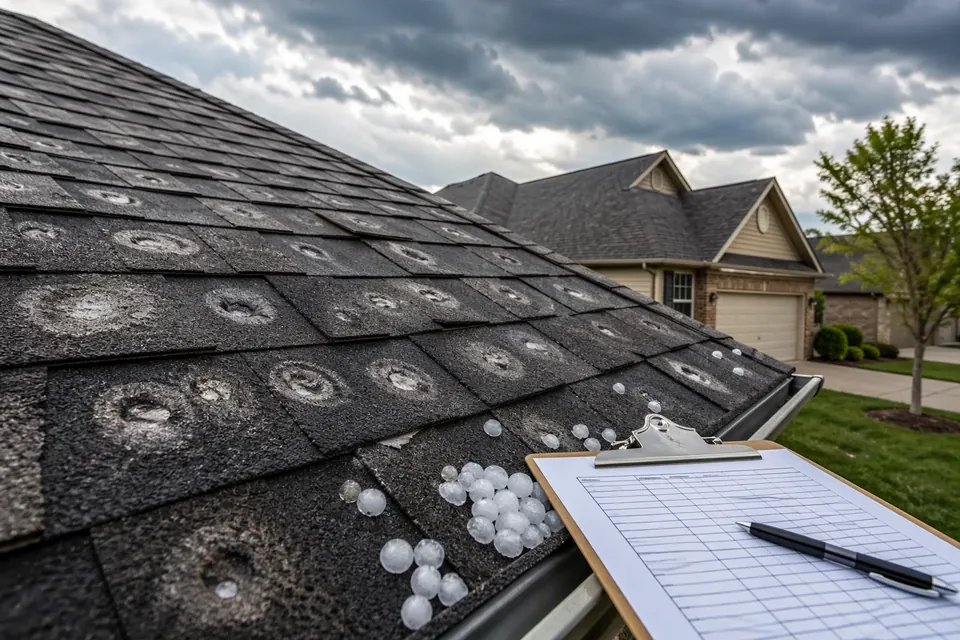
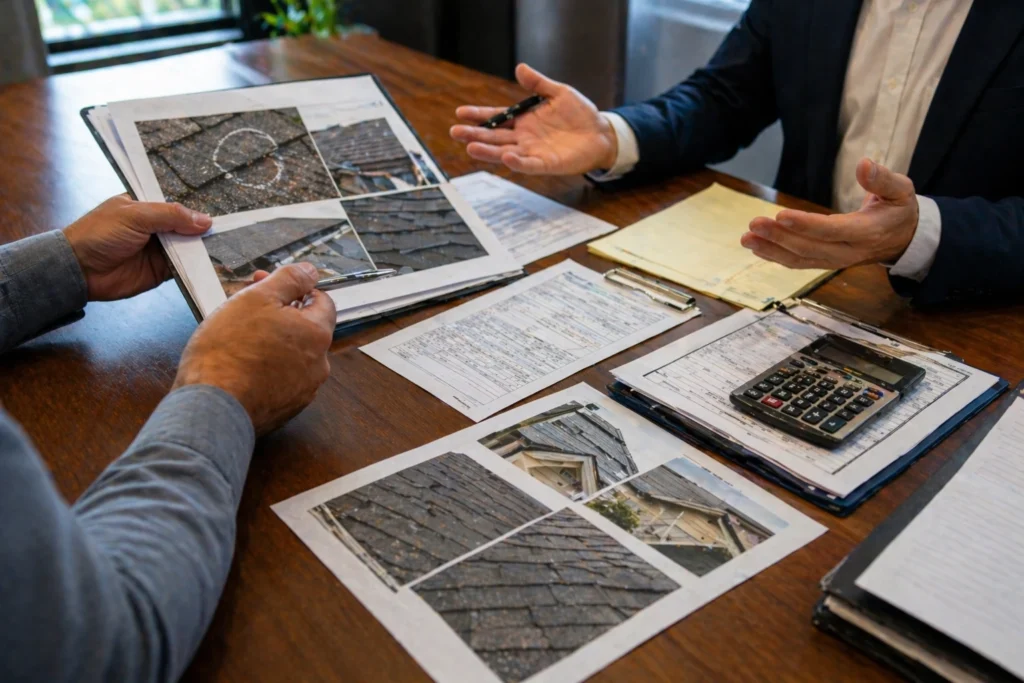
Hail damage is rarely dramatic. A roof can look fine from the street while its protective layers have been compromised. The severity depends on hail size and density, wind speed and direction, the age and condition of the roof, and the material.
| Roof type | Common hail damage | Why it matters for the claim |
|---|---|---|
| Composition (asphalt) shingles | Granule loss, bruising, fractured mats, cracked tabs | Exposed mat ages faster under South Texas sun; fractures can lead to leaks |
| Metal roofing | Dents, chipped coating, seam damage | May fall under a cosmetic damage exclusion unless function is affected |
| Concrete or clay tile | Cracks, broken corners, displaced tiles | Matching replacement tile can be difficult |
| Low-slope commercial roofs | Punctures, fractured membrane, damaged rooftop units | Damage may let water in under the membrane long before it shows inside |
Composition shingles are common on Corpus Christi homes, and metal roofs are a frequent choice on coastal construction, outbuildings, and island homes. Commercial buildings often have low-slope roofs with rooftop HVAC units, which can take hail damage of their own.
"Cosmetic" does not always mean harmless. Granule loss on shingles exposes the asphalt to UV and heat, which can shorten the roof’s life. Whether that is covered depends on your policy wording.
Hail on the Coastal Bend: when and how big
The NOAA NCEI Storm Events Database lists 134 hail reports in Nueces County, 88 of them one inch or larger and 28 golf ball size (1.75 inches) or larger. Most came in spring: 58 in May and 28 in April. San Patricio, Kleberg, and Aransas counties follow the same pattern. Notable local reports include baseball-size hail at Petronila on May 10, 2006, and a May 2, 1993 storm near Banquete where the Red Cross reported some 100 homes with extensive roof and window damage.
Hail on the coast often arrives with strong straight-line winds. On May 8, 2025, NWS storm surveys estimated gusts of up to 115 mph around Petronila and Driscoll. When wind and hail hit together, the claim may involve both lifted shingles and impact damage. Use our storm lookup tool to find reports near your address.
Who pays: TWIA or your homeowners insurer?
Before you file, confirm which policy covers hail. TWIA covers wind and hail (and no other perils) for eligible properties in the designated catastrophe area, which includes Nueces, San Patricio, Aransas, and Kleberg counties. Many coastal homeowners have a homeowners policy that excludes wind and hail, a TWIA policy, and a separate flood policy. Others have a private policy that includes wind and hail.
If TWIA covers hail on your home, the claim goes to TWIA and follows Texas Insurance Code Chapter 2210: file within one year of the damage, TWIA decides within 60 days of receiving the claim or requested information, and accepted amounts are paid within 10 days of the notice. Our TWIA windstorm claims page explains the full process.
Deductibles: run the numbers first
Many Texas policies carry a separate wind/hail deductible, often a percentage of Coverage A (dwelling). As a hypothetical example, a 2% deductible on $300,000 of dwelling coverage is $6,000. If the roof estimate is $9,000, the payment before depreciation would be about $3,000. Our hurricane and wind deductible calculator lets you plug in your own numbers.
Immediate steps after a hailstorm
- Stay safe. Do not climb a wet or steep roof. Watch for downed lines.
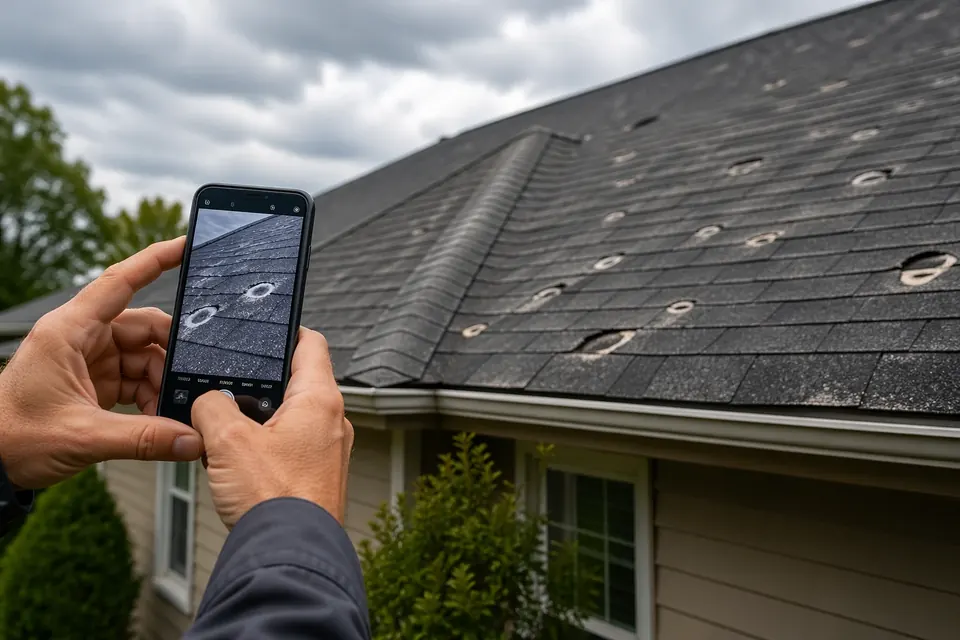
- Document right away. Note the date, time, and hail size. Photograph hailstones with a ruler, then every side of the house and any visible roof damage. Our guide on how to document hail damage for an insurance claim covers this step in detail.
- Prevent further damage. Tarp leaks and keep receipts. Your policy likely requires reasonable steps to protect the property.
- Report the claim to the right insurer. Give the date of loss, a short description, and your contact information. Be accurate, not speculative.
- Be present for the inspection. Walk the property with the adjuster and point out every area you documented.
The hail damage roof insurance claim process
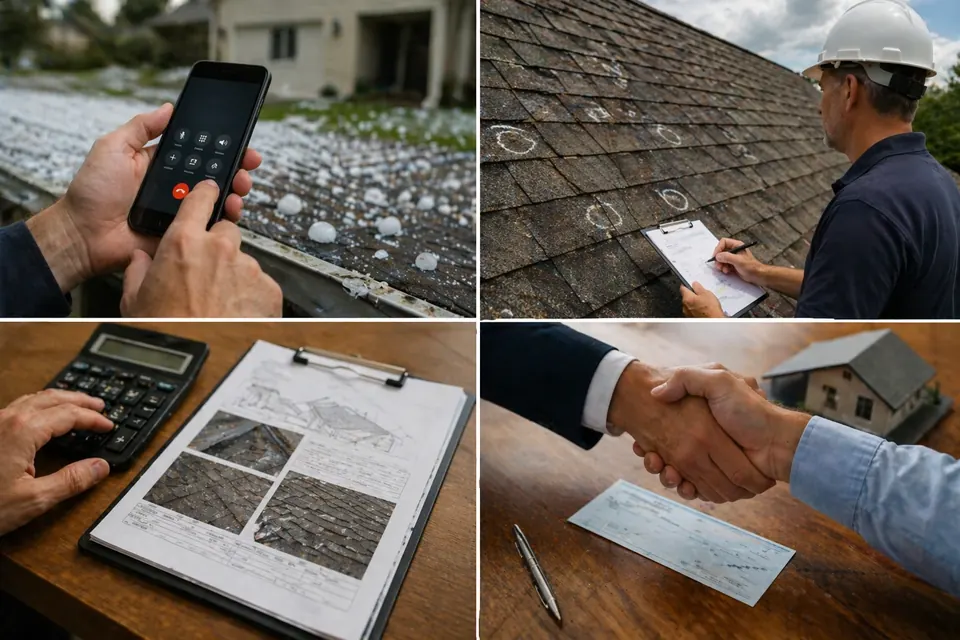
| Stage | What happens | What to watch for |
|---|---|---|
| Report | You notify the insurer and get a claim number | Filing with the wrong insurer, vague date of loss |
| Acknowledgment | Private insurers must acknowledge within 15 days (Tex. Ins. Code §542.055) | Requests for documents: answer in writing and keep copies |
| Inspection | Adjuster inspects roof, exterior, and interior | Rushed inspections, slopes not walked, soft metals ignored |
| Estimate | Adjuster writes a scope, usually in Xactimate | Missing starter, ridge, flashing, vents, permits, windstorm inspection |
| Decision and payment | Claim accepted, partly accepted, or denied | ACV paid first; depreciation held back until repairs are complete |
| Supplement and final | Added items and recoverable depreciation submitted | Policy deadline to complete repairs and claim depreciation |
Preparing for the adjuster’s roof inspection
The inspection is often the single most important day in a roof claim. A little preparation helps make sure the adjuster sees everything you found.
- Print or load your photos. Have them organized by slope and elevation so you can point the adjuster to specific areas.
- Bring the storm details. The date, time, hail size you observed, and any NOAA report near your address.
- Know your roof. Roof age, material, number of layers, and any prior repairs or claims. If you have a prior inspection report or a WPI-8 certificate, have a copy ready.
- Walk the outside first. Point out dented gutters, vents, AC fins, screens, and siding before anyone climbs. Soft-metal damage helps confirm hail size and direction.
- Show the inside. Take the adjuster to any ceiling stains and the attic access.
- Ask questions. Which slopes were walked? Were test areas used? When will you receive the estimate and photos?
- Take notes. Write down the adjuster’s name, company, contact information, and anything said about coverage or next steps.
If your roofer or public adjuster can attend, ask them to be there. A joint inspection lets everyone discuss the same damage on the same day, which can narrow disagreements before the estimate is written. Afterward, ask for a copy of the estimate and the adjuster’s photos so you can compare them with your own.
What insurance estimates often miss on roofs
Roof estimates commonly leave out or under-measure starter strips, ridge caps, drip edge, step and valley flashing, pipe jacks, vents, detach-and-reset of satellite dishes or solar panels, debris removal, and steep or high-roof labor. When those items are added later, it is called a supplement. See our guide to hail damage claim supplements for a detailed list.
Repair or replace? Insurers often start with spot repairs. Replacement has to be supported with evidence: damage spread across slopes, brittle shingles that break during repair, or no reasonable match for discontinued materials. Photos by slope and a count of impacts in a defined test area help make that case.
Permits and windstorm certification for Corpus Christi roofs
The City of Corpus Christi requires a permit to re-roof. The submission includes the Residential Building Permit Application (Form 1003), a detailed scope naming the roofing method and materials, and a completed TDI WPI-1 form from the windstorm engineer or inspector. TDI’s Windstorm Inspection Program covers re-roofs and roof repairs in the catastrophe area, and since April 1, 2026, WPI-1 applications must be certified to the 2024 IRC or IBC. A certificate of compliance (WPI-8) is what keeps a repaired structure eligible for TWIA coverage. These steps cost money, and they belong in the claim estimate. See our local building codes page for more.
Salt air, age, and the "wear and tear" argument
Coastal humidity, salt exposure, and intense sun age roofs faster. Insurers know this and may attribute damage to wear rather than hail. The best answer is careful documentation that separates the two: fresh fractures and bright exposed mat at impact points, dented soft metals on the storm-facing side, and a storm report for the date. If your claim was denied on these grounds, read what to do if your hail claim was denied in Texas.

Common mistakes on roof claims
- Accepting the first estimate without comparing it to a contractor’s scope.
- Signing a roofing contract that commits you before the claim is evaluated.
- Replacing the roof before the insurer inspects.
- Missing the TWIA one-year filing deadline, or the 60-day appraisal window after a TWIA decision.
- Forgetting to claim recoverable depreciation after the work is done.
Getting help with a roof claim
A licensed public adjuster represents the homeowner, not the insurer. A Corpus Christi Public Adjuster can inspect the roof, document damage with drone photos, prepare an Xactimate estimate, review your policy and deductible, and present the claim to TWIA or your carrier. Fees are disclosed in a written contract before any work begins; Texas law caps public adjuster compensation at 10% of the insurance settlement. To understand how that role differs from the insurer’s adjuster, read our public adjuster vs. insurance adjuster comparison.
Our roof damage insurance claims page explains how we work. As a Corpus Christi Public Adjuster serving Corpus Christi, Nueces County, and surrounding Coastal Bend communities, we offer a free claim review of your estimate and photos. Call or text +1 (832) 503-5866.
Frequently Asked Questions
How do I know if my roof has hail damage?
From the ground, look for dented gutters, vent caps, and AC fins, and for dark spots on shingles where granules were knocked off. Inside, look for new ceiling stains or wet attic insulation. A roofer, inspector, or adjuster with proper safety gear can confirm bruising, fractures, and dents on the roof surface.
Does homeowners insurance cover hail damage to my roof in Corpus Christi?
It depends on your policy. Many coastal homeowners policies exclude wind and hail, and those perils are covered by a separate TWIA policy for eligible properties in Nueces, San Patricio, Aransas, and Kleberg counties. Other policies include wind and hail with a separate deductible. Your declarations page will tell you which applies.
How long do I have to file a hail roof claim with TWIA?
Texas Insurance Code §2210.573 requires a TWIA claim to be filed no later than one year after the date the damage occurs. The Commissioner may extend that by up to 180 days for good cause. Private policies have their own notice requirements, so file promptly either way.
Will my insurer replace the whole roof or just repair it?
That depends on the extent of the damage, whether matching materials are available, and your policy terms. Insurers often start with a repair estimate. A full replacement has to be supported with evidence that damage is spread across the roof or that repairs are not practical.
What is a cosmetic damage exclusion?
Some policies exclude hail damage that affects only appearance, such as small dents in metal roofing that do not cause leaks or shorten the roof’s life. If your policy has this endorsement, the claim will turn on whether the damage is functional. Read the exact wording on your policy.
Do I need a permit to replace a hail-damaged roof in Corpus Christi?
Yes. The City of Corpus Christi requires a permit to re-roof. The submission includes Form 1003, a scope of work, and a TDI WPI-1 form from the windstorm engineer or inspector. Your roofer typically handles this, but the costs belong in the claim estimate.
Sources and further reading
This article is general information about property insurance claims in Texas, not legal advice, and not a promise of any coverage or outcome. Your policy language and the facts of your loss control your claim.